How Long Does SOC 2 Take a Realistic Timeline
"How long does SOC 2 take in practice? Get a realistic timeline for Type I and Type II audits, including readiness, observation, and ways to move faster."
A first SOC 2 Type II report typically takes 6–12 months end to end, while a Type I report usually takes 3–6 months. Type I examines controls at a point in time; Type II requires a 3–12-month observation window to show that controls operate effectively over time.
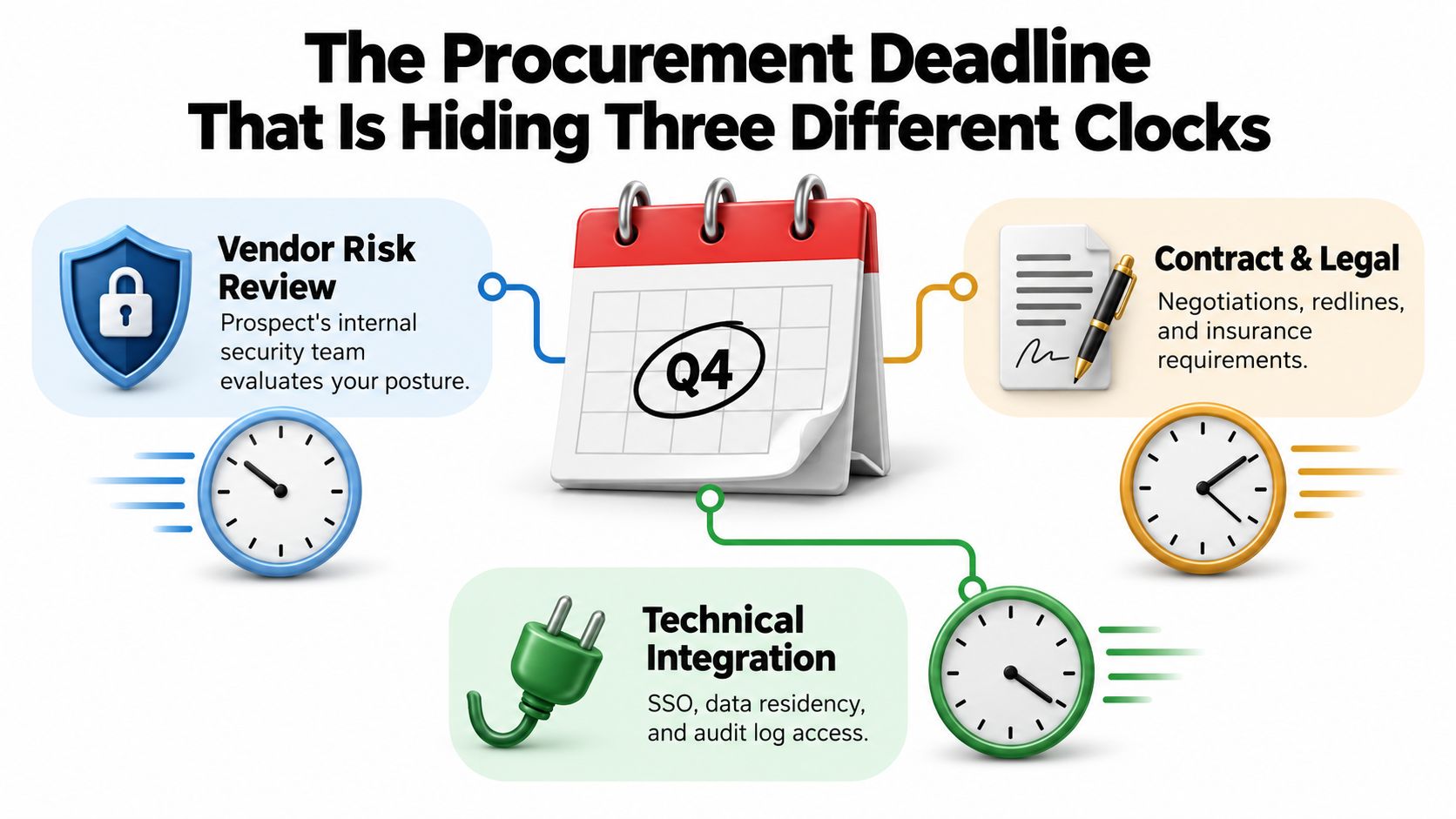
A Fortune 500 prospect asks your team for a Type II report by Q4. The request lands while support is handling billing complaints in social replies, engineering is tracking an outage, and comms is watching for PR risk in mentions. The deadline is real, but the SOC 2 timeline isn't one block of auditor time. It's three clocks, and the one you haven't started may be the one that sets your delivery date.
Table of Contents
- The Procurement Deadline That Is Hiding Three Different Clocks
- Type I vs Type II What Each Report Actually Proves
- The Four Phases of a SOC 2 Timeline
- The Observation Window Why It Is Usually the Slowest Clock
- What Actually Slows Down an Enterprise SOC 2
- A 60-Day Pre-Fieldwork Readiness Checklist
- Vendor Pitches Versus Realistic Timelines
- Three Clocks, One Decision, and Your 30-60-90 Plan
The Procurement Deadline That Is Hiding Three Different Clocks
The question “how long does SOC 2 take?” sounds simple. For an enterprise SaaS team, it hides three separate timelines:
- Readiness comes first. Your team defines the systems and controls in scope, assigns owners, documents policies, fixes gaps, and starts producing reliable evidence.
- The observation period is the Type II clock. Your controls have to operate consistently while the evidence is generated.
- Audit and reporting follow. The auditor tests evidence, asks questions, resolves exceptions, and prepares the report.
A first Type II report generally takes 6–12 months or longer when readiness, the observation window, and reporting are counted; a Type I report typically takes 3–6 months if controls are already implemented (SOC 2 audit timeline guidance). Those ranges don't mean every company spends the same amount of time in each phase. If your policies and controls are already operating, readiness may not hold you up. If your scope is unclear or evidence is scattered, preparation can delay the start of the observation period. If your Type II window hasn't finished, an auditor can't make it disappear by working faster.
For teams mapping SOC 2 alongside other customer or operational requirements, Nutmeg Technologies on compliance standards offers useful context on the broader compliance environment. Use it to inform the conversation, not as a substitute for defining the prospect's actual security requirements.
The useful question isn't “How many months?” It's “What can we credibly deliver by our deadline, and what work has to continue after?”
Type I vs Type II What Each Report Actually Proves
A security team buying a SOC 2 report wants evidence about how your organization protects its systems and customer data. The report type determines what that evidence can demonstrate.
Type I assesses control design and implementation at a specific point in time. It can help move a procurement review forward when a buyer needs a near-term trust signal. But it doesn't show that your controls operated effectively over an extended period.
Type II assesses whether controls operated effectively throughout a defined period. The auditor examines evidence from normal operations, rather than checking only how the controls look on one date. That's why Type II takes longer, as this explanation of the Type I and Type II distinction makes clear.
| Dimension | Type I | Type II |
|---|---|---|
| What it evaluates | Control design and implementation at a point in time | Control operation over a defined period |
| What it can support | An interim trust signal for a near-term review | Evidence of sustained control performance |
| Calendar effect | Doesn't require a period of operating evidence | Requires an observation window before final testing |
| What comes next | Controls still need to operate and generate evidence for a later Type II | The report reflects performance during the selected period |
Here's the deadline rule I use with teams: if the deadline is under nine months, Type I as a bridge is usually the realistic move. If you have a full calendar year, start a six-month Type II observation period early and aim for the stronger evidence. That's a decision heuristic, not a guarantee of report timing. Readiness and reporting still need room in the schedule.
A Type I isn't a shortcut that eliminates Type II work. It can buy time in a procurement conversation while your team begins operating controls and collecting the evidence a later Type II will require. Tell the customer which report you can deliver, what it proves, and what remains underway. Don't present a point-in-time report as proof of sustained performance.
The Four Phases of a SOC 2 Timeline
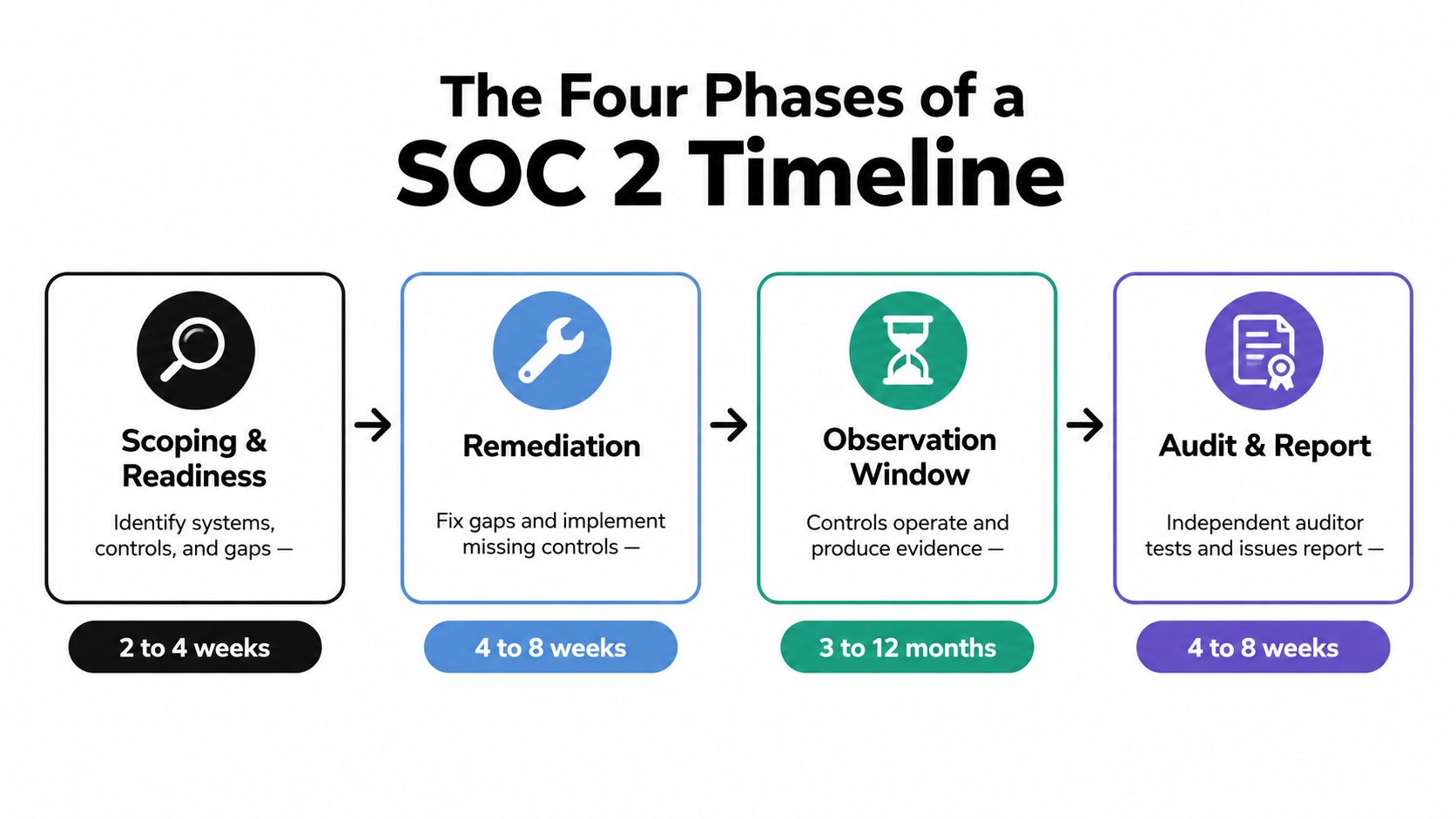
Think of the engagement as four phases, not one audit appointment. The calendar depends on when your controls are ready to operate and produce evidence, not just when a CPA firm has availability.
Scoping. Define the services and systems the report will cover, along with the applicable Trust Services Criteria. For an enterprise platform, be precise about cloud infrastructure, integrations, production operations, and privacy processes. A vague boundary invites follow-up and can pull more teams into the work than expected.
Readiness and remediation. Identify gaps, assign owners, document how controls work, and fix what isn't in place. This is often the most demanding phase for a first-time applicant. A control that exists informally but has no clear owner or repeatable evidence isn't ready just because the team says it happens.
Observation. Operate controls consistently and retain evidence throughout the selected period. This phase can't start just because everyone wants the deadline to move closer. The controls need to be working and the evidence process needs to be dependable.
Audit and reporting. The auditor conducts walkthroughs, tests evidence, follows up on exceptions, and prepares the report. Formal Type II fieldwork is commonly about 6–10 weeks, and exception handling and finalization may add 2–6 weeks (SOC 2 examination timing benchmarks). Those are audit and reporting tasks, not substitutes for readiness or the observation period.
Scoping and readiness can overlap. For instance, while security defines the system boundary, engineering can identify where access, change, and monitoring evidence lives. But don't start the observation period until the relevant controls are operating. Starting too early can leave gaps in the evidence and force the team to explain why part of the period doesn't demonstrate consistent performance.
The most useful acceleration is to settle boundaries and ownership early, then resolve control gaps before the observation clock starts. More auditor capacity won't fix a control that hasn't been implemented.
The Observation Window Why It Is Usually the Slowest Clock
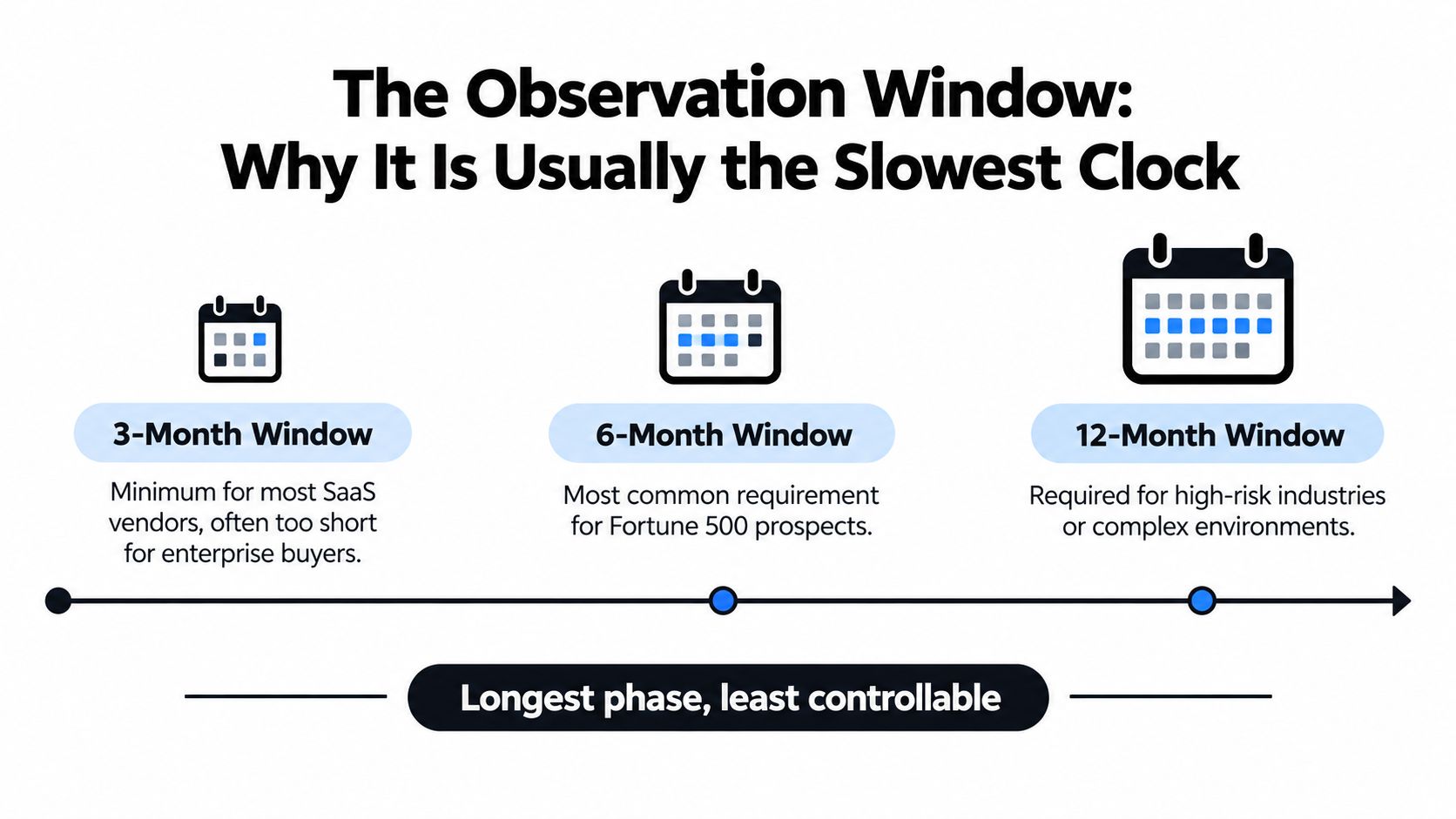
The observation period is where a Type II report gets its evidence of day-to-day performance. Common windows are 3, 6, 9, or 12 months; six- and twelve-month periods are frequently used (SOC 2 Type II observation window guidance). For a first report, the key issue isn't just how long you select. It's whether your team can run every in-scope control reliably for that whole period.
Evidence should come from ordinary work, not a last-minute reconstruction. Depending on your controls, that can include access reviews, change-management records, incident logs, monitoring outputs, vendor reviews, and training completion. If access reviews live in an inbox, change approvals are scattered across tickets, and incident notes are incomplete, auditors may need follow-up before they can test what happened.
Late rollout is a common schedule trap. A control that's enabled after the window starts has no operating evidence from the period before it was implemented. Don't assume you can count that time as proof. Confirm with your auditor how a late implementation affects the report period, and plan to start the clock only when the control and evidence process are ready.
Shorter isn't automatically better
A three-month window may help with an urgent procurement deadline, but the shorter period doesn't remove readiness or the reporting work. Enterprise buyers may regard a six- or twelve-month report as stronger evidence that controls held up over time. Ask the prospect what they'll accept before choosing the shortest possible window.
Practical rule: Choose the shortest window you can credibly defend, not the shortest window a vendor pitches.
What Actually Slows Down an Enterprise SOC 2
Enterprise schedules slip when the team treats scope and evidence as details to settle later. For a platform with cloud services, customer integrations, production operations, privacy processes, and multiple control owners, each added system boundary can create more evidence requests, walkthroughs, and testing dependencies (enterprise SOC 2 timeline considerations).
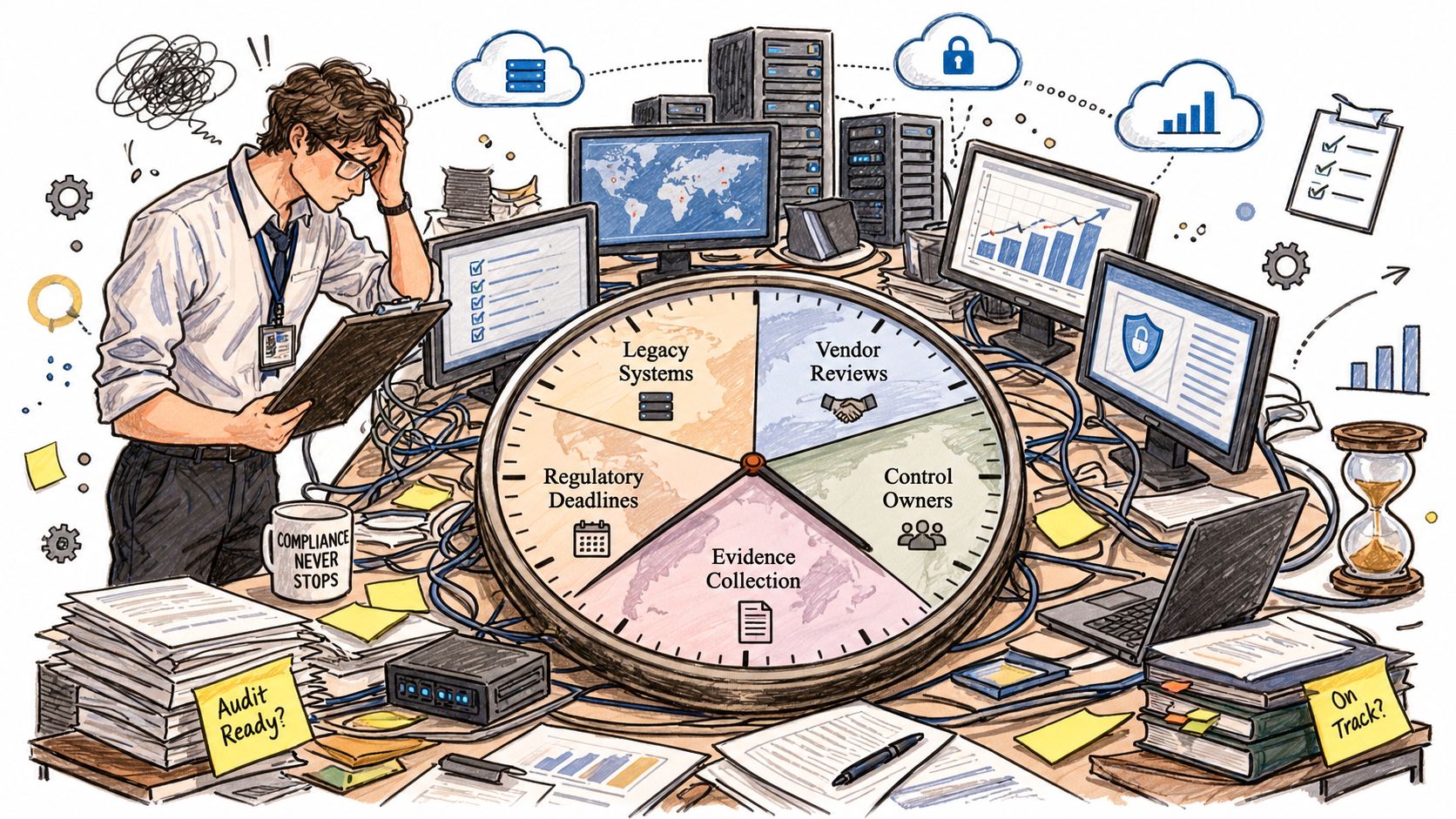
The same problem shows up in social operations. Support may route a billing complaint to finance, engineering may own the outage response, and comms may handle a risky mention. If a control depends on those teams but no one is accountable for producing its evidence, an auditor request can turn into a cross-functional scavenger hunt.
Common sources of delay
- Scope creep: New integrations or services enter the audit boundary after the team has planned its controls and evidence requests.
- Unclear ownership: A process may happen regularly, but nobody is formally responsible for showing when it happened and what the result was.
- Fragmented evidence: Screenshots, tickets, shared drives, and email threads may be incomplete or hard to verify consistently.
- Late exception handling: Teams discover missing reviews or unclear records during fieldwork instead of catching them while the control is running.
The contrast is straightforward. Teams with clear system boundaries, named control owners, and centralized, dependable evidence can spend less time chasing material and answering avoidable follow-ups. In my experience, timeline slippage is often a project-management and evidence-hygiene problem, not a shortage of auditor hours.
A 60-Day Pre-Fieldwork Readiness Checklist
Use the sixty days before fieldwork to test whether your controls produce evidence that an auditor can follow. Hand this checklist to security, engineering, and operations leads. If they can't identify an owner or show where a record lives, resolve that before fieldwork begins.
Evidence
- Access reviews: Complete them and store the record in a shared, controlled location. Make the reviewer and outcome clear.
- Change tickets: Export records with consistent labels so reviewers can identify approvals and completed changes.
- Incident retrospectives: Keep the review record with severity and resolution dates, and make sure it reflects what occurred.
Owners and systems
- Control owners: Name an owner for each applicable Trust Services Criterion and give that person a clear route for escalating exceptions.
- Auditor requests: Appoint one point of contact to track incoming requests, route them to the right teams, and monitor completion.
- System description: Keep an up-to-date description of the service and how in-scope systems support it.
- Services and data flows: Maintain a current list of in-scope services and subprocessors, plus a data-flow diagram that matches the deployed environment.
Monitoring
- Control alerts: Check that monitoring can flag missed or failed control activity.
- Evidence review: Set a weekly review rhythm so exceptions surface while the team can still investigate and correct process gaps.
- Vulnerability work: If your readiness work includes understanding how vulnerability assessment fits into security operations, TekRecruiter's vulnerability assessment guide can help frame that part of the discussion.
This checklist protects both sides of the schedule. Clear ownership and reliable records can reduce fieldwork friction, while working controls and monitoring reduce the risk of problems during the observation period. Don't confuse a tidy document folder with a control that operates consistently.
Vendor Pitches Versus Realistic Timelines
Be skeptical when a vendor says your SOC 2 will be done in thirty or sixty days. That may describe a readiness sprint or another single phase. It doesn't mean your team can complete preparation, operate Type II controls through an observation period, and receive a final report inside that time. Three months is generally the shortest observation period seen in practice, and it doesn't remove readiness or reporting work (SOC 2 audit timeline guidance on short engagements).
Even unlimited auditor capacity can't create evidence from a period that hasn't happened. If a customer asks for “SOC 2 compliant” language, don't imply that a Type I proves sustained performance. Explain exactly what your current report covers and what comes next.
A responsible sequence is clear: deliver a Type I as an interim trust signal when that's what your deadline supports, tell the customer when the Type II observation period is expected to start and when you expect to report, then track the gap openly. For teams comparing certification programs as part of a broader procurement discussion, Faberwork LLC's energy certification successes offer a separate example of how certification work can be presented. Don't treat another program's story as a SOC 2 timeline.
Some mature organizations deliberately choose a twelve-month Type II window. A rushed short window isn't automatically the best commercial decision if a longer period would give the buyer more confidence in sustained control performance.
Three Clocks, One Decision, and Your 30-60-90 Plan
Keep the three clocks visible: readiness before the period starts, the observation period, then audit and reporting. Your plan should match the procurement deadline, not a vendor's most optimistic pitch.
First thirty days: Lock the system boundary, name control owners, and confirm what the prospect will accept. Choose whether the deadline calls for an interim Type I or a Type II target. If you're pursuing Type II, identify the controls that must be operating before the observation window begins.
Next sixty days: Close the highest-risk readiness gaps and centralize evidence so owners can produce reliable records without searching through inboxes or scattered tickets. Start the observation window only when the in-scope controls and evidence routines are ready. Keep the customer informed if the report date depends on a period of operating evidence.
Day ninety and beyond: Maintain the evidence-review rhythm, escalate missed controls promptly, and prepare the team for auditor sampling. Don't treat evidence collection as an annual scramble. It's part of operating the controls your report will describe.
The fastest audits are the ones where the team made a clear decision early, not the ones where everyone hoped the deadline would move.
Make one decision this week: does your actual deadline fit a Type I bridge followed by Type II, a Type II built around a six-month observation window, or a more deliberate Type II built around a twelve-month window? Get agreement from security, engineering, and the customer before the team commits to a date.
Sift AI unifies social and community channels into one command center, where AI helps filter noise, tag intent, route issues, and draft replies while people approve and own the hard calls. If your support teams are managing billing complaints, outage surges, PR escalations, and feature requests across social channels, visit Sift AI to see how it can help coordinate the operational work.