8 Customer Service Problems and How to Fix Them
"Explore 8 customer service problems affecting social care teams, from slow response times and misrouting to noise, scams, and compliance gaps."
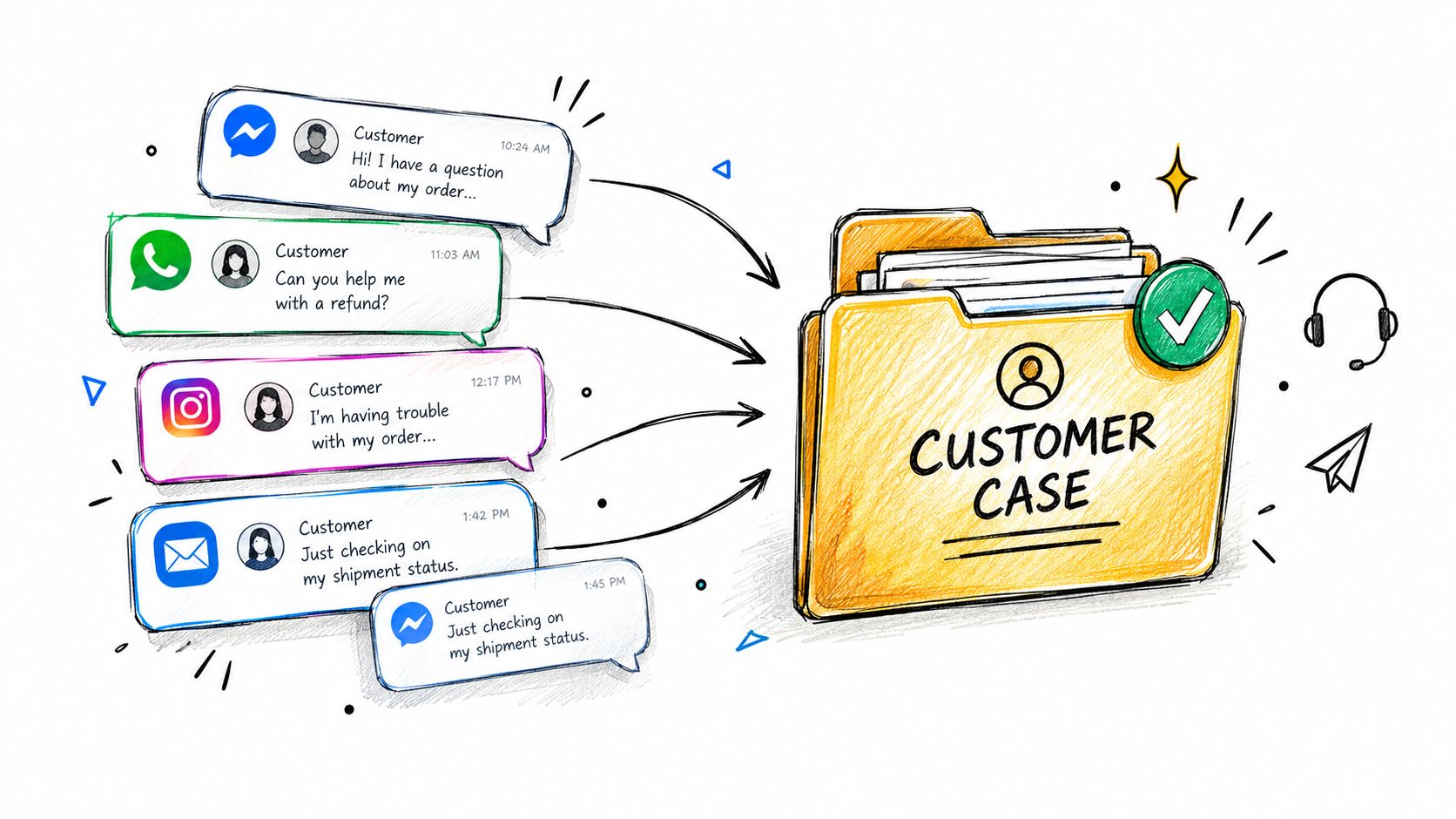
A customer posts about a duplicate charge on X, sends a screenshot on WhatsApp, follows up on Instagram, then hits an app error while checking the account again. To that customer, it's one urgent billing problem. To a social care team working separate inboxes, it can become four unlinked conversations, two owners, and replies that contradict each other.
That's how ordinary requests turn into serious customer service problems. The stakes aren't abstract. The Customer Experience Impact Report found 82% of U.S. consumers had stopped doing business with a company after a poor experience, with 73% citing rude staff and 55% citing slow resolution in that same report. You don't fix that risk by answering one channel faster. You fix it by treating every mention, DM, comment, and forum post as part of one customer story.
The eight problems below show where support via social usually breaks, from fragmented queues to scam waves and buried product feedback. Each fix follows the same principle. Let AI handle repetitive triage, tagging, clustering, and drafting. Keep humans in control of sensitive, ambiguous, and high-impact decisions.
Table of Contents
- 1. Fragmented Channels and SLA Blind Spots
- 2. Outage and Launch Volume Surges
- 3. Sensitive Complaints in Public Replies
- 4. Misrouting Across Support, Finance, Engineering, and Comms
- 5. Noise, Spam, and Bot Floods
- 6. Impersonation and Scam Waves
- 7. Multilingual Slang, Sarcasm, and Image-Based Complaints
- 8. Feature Requests and Bugs Buried in DMs and Community Threads
- 8 Key Customer Service Problems Compared
- Build a Care System That Handles the Whole Story
1. Fragmented Channels and SLA Blind Spots
Your Instagram report looks healthy. WhatsApp tells a different story. That's the trap when X, Instagram, TikTok, WhatsApp, Telegram, Discord, Facebook, and forums each run on separate inboxes, notifications, and reports.
A telecom customer complains publicly on X, then sends an account number by DM. One agent answers the post, another answers the DM, and neither sees the full history. The customer repeats the account details, the SLA clock restarts in the second system, and your channel averages hide the wait.
Social expectations make that gap visible fast. In a survey of consumers who contacted companies through social media, 32% expected a response within 30 minutes and 42% within 60 minutes, while 57% wanted the same speed at night and on weekends. If one queue isn't staffed or measured, you'll miss that expectation without seeing it in the headline report.
Fix the Case Record Before the SLA
- Start one clock: Create a shared case at the first message on any channel, then link later posts from the same customer to it.
- Measure by issue: Report first response, meaningful response, and resolution by customer issue, not only by platform.
- Assign one owner: Use a unified inbox to flag likely duplicates, keep internal notes attached, and stop parallel replies.
A shared case view turns scattered posts into a single workflow your leads can audit.
2. Outage and Launch Volume Surges
An outage rarely arrives as a neat incident ticket. It arrives as hundreds of near-identical posts. Is it down. App crashed again. Refund please. Buried inside that surge may be the one screenshot showing a failing payment step, a specific error code, or a safety issue that needs a different owner.
Teams staffed for normal volume fall behind quickly, and the queue rewards whoever shouts most often rather than whoever brings new information. Engineering can end up learning about a login failure from public posts before support has packaged the signal internally.
Non-response compounds the damage. A customer service survey reported that 58.3% of consumers never hear back after contacting a company, even though more than 82% of reported issues in that source were resolved the same day when customers did receive service. During a surge, coverage matters as much as agent speed.
Practical rule: During an incident, cluster first and answer the cluster. Don't make ten agents write ten versions of the same holding reply.
Build the Surge Workflow in Advance
Set spike detection by channel, keyword, and error phrase so the on-call lead gets alerted before the queue saturates. Pre-approve holding replies for known incident types, but require human review for account-specific claims, compensation, or anything outside the approved facts.
Cluster duplicates into one incident thread and send engineering counts, example posts, timestamps, platforms, and affected flows. That turns angry volume into an early warning system, while customers still get a timely acknowledgment.
3. Sensitive Complaints in Public Replies
A customer replies to your launch post with a refund demand and part of a card number. Answer in public and you may repeat private data. Tell them to check DMs with no context and you look evasive. Refuse to engage and the screenshot travels without your side of the story.
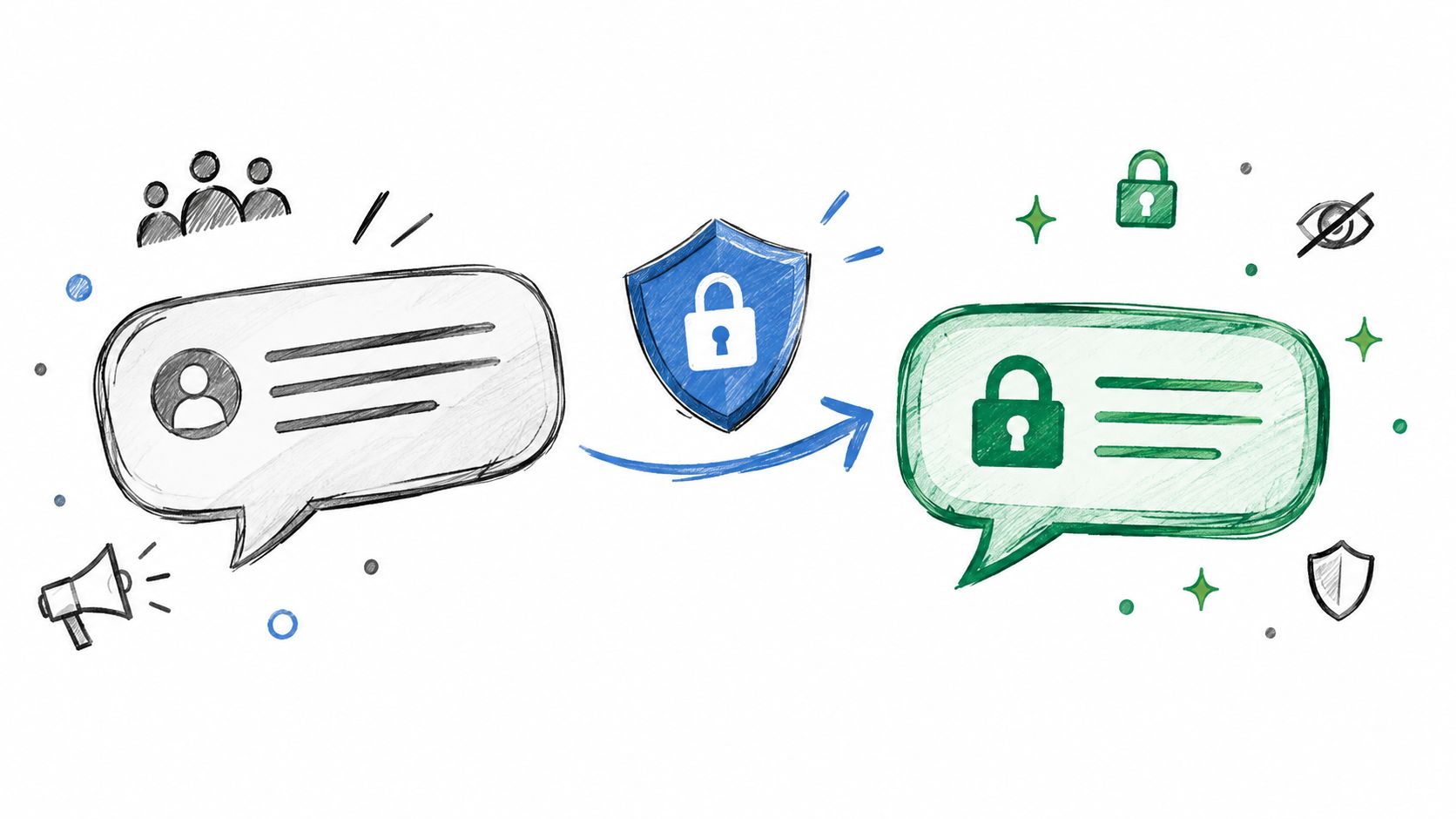
The safer pattern is a two-stage handoff. Acknowledge the person publicly, state that you're moving account details to a secure conversation, then continue privately with identity checks and the full case history attached.
That expectation is measurable. A 2025 consumer survey found 51% of people who contact a brand publicly expect a public acknowledgment before moving to a private direct message. If you auto-close the public thread after resolving the DM, everyone who saw the complaint may still think you ignored it.
What Agents Need Before They Reply
Create a sensitive data policy with concrete examples covering payment details, health information, addresses, order numbers, and identity documents. Pair it with approved handoff language that explains why the conversation is moving and what happens next.
- Never repeat secrets: Don't quote card numbers, passwords, recovery phrases, or verification codes back to the customer.
- Control visibility: Route billing, fraud, and account access cases through role-based permissions so only authorized staff see full details.
- Close the public loop: After private resolution, add a brief public confirmation when appropriate and permitted.
This security step protects the customer without making your team sound scripted.
4. Misrouting Across Support, Finance, Engineering, and Comms
One post can contain three jobs. A customer says they were charged twice, the app deleted saved data, and they're about to share the experience with a large audience. Finance owns the charge, engineering owns the data loss, and comms may need to review the public reply. A general queue forces the first agent to either improvise or wait.
That delay often looks like an agent problem when it's really an ownership problem. Microsoft's 2015 Global CX Wakeup Call Report found, among customers who couldn't recall a recent successful experience, 31% said the employee lacked authority to help and 29% received inaccurate or conflicting information. Sending work to someone without authority doesn't create responsiveness. It creates another handoff.
Route by Intent, Severity, and Authority
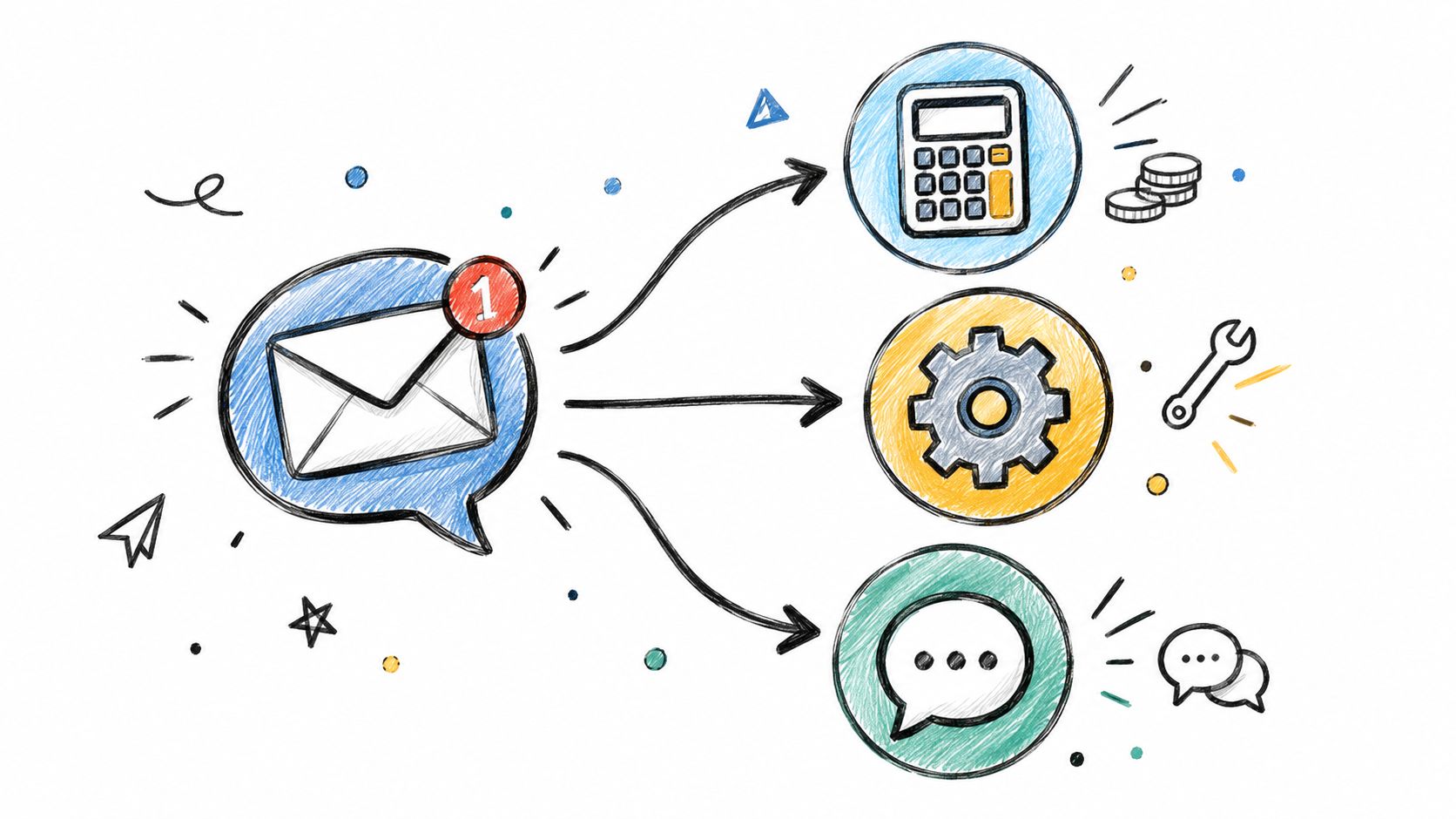
Tag incoming conversations by intent, urgency, customer impact, and required function. Payment failures go to finance, reproducible crashes to engineering, press or creator risk to comms, and legal threats to legal. If a case needs two owners, name a primary owner and record the secondary task so neither team assumes the other replied.
Test rules against recent mentions before launch, including edge cases that resemble work in a repair ticket system, where the intake label rarely captures the whole job. Record why each case moved, who accepted it, and when the escalation timer started.
Routing decisions become clearer when each handoff carries the original posts and customer context.
5. Noise, Spam, and Bot Floods
Your reviewers aren't slow because they can't recognize giveaway spam. They're slow because they have to read hundreds of obvious non-cases before reaching the customer who actually needs help. Promotional replies, copied giveaway posts, off-topic mentions, and bot floods consume the attention that should go to billing failures and account lockouts.
Keyword blocklists create their own failures. Block a product name used by spammers and you may hide real complaints. Allow every variation and the queue fills again. Slang makes the problem worse, because a legitimate customer and a bot can use the same short phrase for completely different reasons.
Noise filtering shouldn't ask, does this post contain a bad word. It should ask, is a real customer asking us to do something.
Filter on Context and Behavior
Use context-aware filtering that weighs intent, account behavior, repetition, links, and conversation history. A crypto brand, for example, needs to remove copied giveaway replies without suppressing a genuine complaint that mentions the same promotion or product.
Set auto-closure rules only for clear spam and promotions, then sample closed items weekly for false positives. Track noise-filtered percentage, reviewer time saved, and reopened cases together. The operational lesson resembles taming alert fatigue in DevOps, where reducing low-value alerts only helps if real incidents still surface quickly.
Keep ambiguous items in a review lane. That's the trade-off. Aggressive automation clears the queue on paper, but conservative thresholds protect customers whose wording looks unusual.
6. Impersonation and Scam Waves
Scammers don't wait for your support team to catch up. When a customer posts a public complaint on X, Instagram, Telegram, or Discord, a fake support account can reply within minutes with a copied logo, a helpful tone, and a phishing link. During outages, that timing gets even more dangerous because customers are actively searching for anyone who'll respond.
The customer may reasonably believe the message came from your brand. If they share a password, recovery phrase, or payment detail, your team inherits a trust problem that started as someone else's fraud.
Coinbase gives a useful public example of the boundary customers need. The company has warned users that its support team won't DM them first and won't ask for passwords or recovery phrases. That message only works if customers see it before a crisis, not after they've clicked.
Make the Safe Path Obvious
- Pin the rule: Publish a clear we will never DM first notice on support profiles, community rules, help pages, and outage updates.
- Watch for lookalikes: Monitor copied names, logos, profile photos, and bios, especially after launches and service incidents.
- Route to trust and safety: Don't park suspected impersonation in general support. Send it to the team that can report, document, and pursue takedowns.
- Warn in context: When a scam reply appears under a real complaint, reply from the verified account and direct the customer to the official channel.
Log every report with screenshots, account handles, target posts, and timestamps. Patterns across reports help you spot a coordinated wave instead of treating each fake account as an isolated nuisance.
7. Multilingual Slang, Sarcasm, and Image-Based Complaints
Great, another outage. A keyword tool can read that as praise. Add regional slang, a second language, and a screenshot of a failed payment screen, and the complaint may never reach the billing queue. The customer wrote clearly for a human from their market. Your tagging system just wasn't built for how people post.
Memes create the same blind spot. A joke image about a broken export button can be a reproducible bug report, while a sarcastic thank-you can signal a customer who's close to escalating publicly. Literal sentiment labels flatten both into the wrong priority.
Public silence makes misclassification costly. A 2025 national study found 24% of consumers posted their issue on social platforms, while 43% of those posts received no corporate response. Some of those misses are staffing failures. Others start earlier, when the system doesn't understand the post well enough to route it.
Train for the Markets You Serve
Test tagging with real posts from each market, including mixed-language text, abbreviations, sarcasm, screenshots, and image-only complaints. Measure accuracy by language and intent, not as one global average that hides weak spots.
Let agents correct tags and feed those corrections into review and model improvement. Use native-speaking reviewers for high-impact markets, brand-sensitive replies, and cases where tone changes the meaning. AI can draft in your brand voice, but a person should approve replies where cultural context, humor, or distress could make a technically correct answer sound tone-deaf.
8. Feature Requests and Bugs Buried in DMs and Community Threads
Some valuable product signal never becomes a ticket. A customer DMs that export broke after an update. Three Discord members request the same file format in separate threads. Someone leaves a precise workflow complaint under an unrelated announcement, gets a polite thanks, and disappears from product view.
Support then closes the conversation because there's nothing else an agent can do. Months later, product hears the same request through sales calls or churn interviews and treats it as new. The signal wasn't missing. Your workflow buried it.
Poor follow-through also affects resolution overall. Recent survey findings reported only 11% of consumers say all their inquiries are resolved, while 51% have escalated complaints beyond ordinary support channels. When customers can't see that feedback went anywhere, escalation becomes the rational next step.
Turn Scattered Comments into Product Signal
- Create a product signal tag: Separate feature requests, defects, usability friction, and account-specific support at intake.
- Attach evidence: Send product and engineering the original wording, screenshots, device or app details, customer segment, and links to related threads.
- Aggregate before escalation: Combine repeated requests into one insight with counts and examples for roadmap reviews.
- Close the loop: Reply to the original poster when a fix ships or a request is declined with a clear reason.
Consolidated feedback gives roadmap owners evidence they can prioritize instead of anecdotes they have to reconstruct.
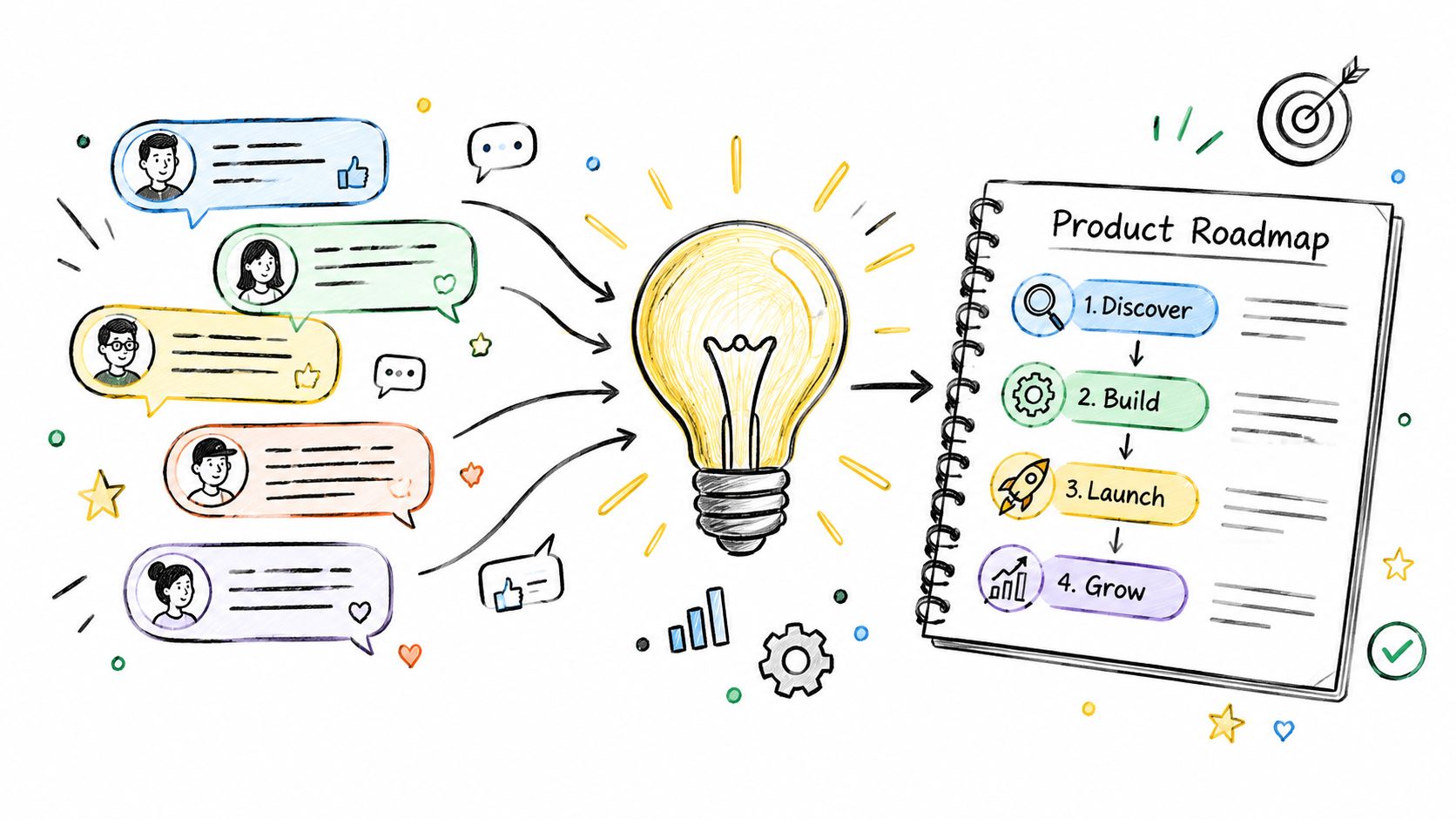
8 Key Customer Service Problems Compared
| Challenge | 🔄 Implementation Complexity | Resource Requirements | 📊 Expected Outcome | ⭐ Ideal Use Case | 💡 Key Advantage |
|---|---|---|---|---|---|
| Fragmented Channels and SLA Blind Spots | High, unify inboxes, case records, and SLA rules | Unified inbox, cross-channel identity matching, reporting | Clearer issue-level wait times; fewer duplicate replies | Teams supporting customers across multiple social and messaging platforms | One owner and shared case history across channels |
| Outage and Launch Volume Surges | Medium–High, configure spike detection, clustering, and escalation | Monitoring tools, incident lead, engineering and communications contacts | Faster incident awareness and more consistent updates | Outages, product launches, or sudden surges in customer mentions | Separates repeated posts from new, actionable signals |
| Sensitive Complaints in Public Replies | Medium, establish privacy rules, secure handoffs, and permissions | Approved response templates, secure channels, trained agents | Reduced public exposure of sensitive information | Billing, account, health, or financial complaints | Safer handling with a clear path to private support |
| Misrouting Across Support, Finance, Engineering, and Comms | Medium–High, define intent-based routing and escalation rules | Routing workflow, team ownership rules, severity criteria | Faster resolution and clearer accountability | Messages involving multiple teams, legal risk, or public attention | Directs cases to the right owner with context |
| Noise, Spam, and Bot Floods | Medium, tune context-aware filters and review accuracy | Filtering tools, moderation capacity, sampling process | Less manual review and better visibility into genuine requests | High-volume brand accounts, forums, and online communities | Reduces low-value queue items without relying only on keywords |
| Impersonation and Scam Waves | Medium–High, coordinate monitoring, reporting, and takedowns | Trust and safety contacts, account monitoring, response guidance | Faster scam detection and reduced customer exposure | Brands targeted by fake support accounts or phishing campaigns | Establishes a clear security escalation path |
| Multilingual Slang, Sarcasm, and Image-Based Complaints | High, validate models across languages and media types | Multilingual reviewers, image analysis, market-specific examples | More accurate sentiment, tagging, and escalation | Global communities with varied language and visual content | Captures context that keyword-based tools can miss |
| Feature Requests and Bugs Buried in DMs and Community Threads | Medium, create consistent tagging, aggregation, and routing | Product and engineering contacts, feedback tracking, case context | Consolidated product insights and better follow-up | Teams gathering product feedback from support and communities | Turns scattered messages into actionable product signals |
Build a Care System That Handles the Whole Story
Faster replies alone don't solve customer service problems in social channels. A fast acknowledgment sent to the wrong owner, based on the wrong tag, while the same customer waits unanswered on another platform, still leaves the underlying issue unresolved. Strong social care teams build an operating system around the full story, from first mention to owned resolution and product follow-up.
That system starts with a unified inbox across X, Instagram, TikTok, WhatsApp, Telegram, Discord, Facebook, and forums. Every conversation needs a shared case record, one SLA clock, visible ownership, and linked duplicates. Without that foundation, leaders can't tell whether customers are waiting because of staffing, routing, channel coverage, or a case nobody accepted.
The next layer is triage. AI should filter clear noise, cluster duplicates, detect intent and urgency, and route work to support, finance, engineering, comms, product, or trust and safety. It can also draft replies from approved knowledge and prior context. Humans should approve sensitive billing explanations, fraud responses, legal threats, vulnerable-customer cases, and public replies with reputational risk. That division protects judgment instead of replacing it.
Start with One Broken Workflow
Don't rebuild every queue at once. Pick the failure causing the most customer repeat contact, whether that's cross-channel duplicates, misrouted billing complaints, scam replies during outages, or product feedback disappearing into DMs. Define the intake tags, owner, escalation threshold, public acknowledgment, private handoff, and closure criteria for that one path.
Then measure what changed. Useful measures include contact coverage, first response, meaningful response, handoff latency, first-contact resolution, repeat-contact rate, auto-closure accuracy, noise-filtered percentage, and reviewer fatigue. Message volume by itself tells you very little. It can rise because customers found you more easily, fall because a filter hid real demand, or stay flat while unresolved cases age without notice.
Sift AI fits this orchestration model as an AI operating system for social and community operations. It brings channel activity into a unified workflow, filters noise, tags intent, routes cases to the right team, drafts replies, and surfaces analytics while people stay in the loop for consequential decisions. Teams setting shared definitions for ownership and escalation can also compare their approach with the case management guide from AI Video Detector, then adapt the parts that match their support model.
The practical test is simple. Pick a recent messy case and trace it across every channel it touched. If your team can't reconstruct who saw it first, who owned it, what the customer was told, and why it closed, you don't have a staffing problem alone. You have an orchestration problem, and that's fixable one workflow at a time.
Bring your scattered mentions, DMs, comments, and community threads into one operating workflow with Sift AI, where AI filters noise, tags intent, routes urgent cases, and drafts replies while your team approves the decisions that matter. Visit Sift AI to see how unified social care can shorten the distance between a customer's first post and the person who can resolve it.